Últimas noticias

A Mike Cavanah le Fascinan los Camaro 1969, pero no Incursionó en el Mercado Hasta que Vio Este Auto

Queda Muy poco del Camaro original en la máquina Pro Street de Mike Cavanah

Si bien el Camaro 1969 de Mike Cavanah tiene una apariencia delicada, su rendimiento es todo menos eso

Cuando Mike Cavanah comenzó a construir su gran auto Pro Touring, compró en eBay un Camaro 1969 para que fuera su punto de partida. Pese a que era un gran fanático del Camaro, particularmente de la chapa metálica del modelo del 69, Mike consideró que quizás ya había suficientes Camaro Pro Touring y cambió sus planes. Construyó su ahora famoso Chevelle Grand Sport 1966.

En pocos años, Mike completó la construcción del Chevelle y disfrutaba de conducirlo en las Monañas de Santa Mónica, tandas en circuito, y eventos de autocross. Fue entonces cuando podría decirse que otro Camaro 1969 le cayó del cielo. El auto era despampánate, el precio era justo, y no necesitaba prácticamente nada más, y dado que no le esperaba una construcción de tres años mientras tuviera el Chevelle en funcionamiento, decidió comprarlo.

Se necesitan poderosos frenos cuando hay un poderoso motor bajo el capó

Calibradores Brembo de 15,5 pulgadas equipados con pastillas y rotores de cerámica en cada esquina de este Camaro 1969

Antes de entrar en detalles, la historia de este auto es verdaderamente única. Lo compró el lanzador de las grandes ligas Brad Penny, quien en ese entonces jugaba para los Dodgers; pretendía reconstruirlo y modificarlo. Para ello, lo llevó al taller de reparaciones del ahora difunto Boyd Coddington en donde lo desmontaron y repararon todos los daños. Después del fallecimiento del maestro constructor, Penny trasladó su proyecto a Timeless Kustoms, en donde lo completaron en el 2013. Penny estaba demasiado ocupado con su carrera, así que le vendió el coche a un tercero, quien posteriormente se lo regresó a Timeless Kustoms. A cambio Timeless Kustoms, contactó a Mike, ya que sabía de la afición que tenía por los Camaro de 1969.

Más allá de la carrocería de este modelo 1969, Mike estaba fascinado con el vehículo debido al alto nivel de mano de obra y la atención al detalle de Timeless Kustoms, sin mencionar que el auto estaba listo para ser conducido en el momento. Mike ordenó que se hicieran algunos cambios en el carro para adaptarlo a sus preferencias personales, y no mucho tiempo después lo llevó a casa.

Si bien el Camaro venía originalmente con un pequeño bloque de motor V-8, el auto no se parece nada a motor

El pequeño bloque de motor biturbo de 380 pulgadas cúbicas del Chevrolet LSX está sintonizado para producir más de 750 caballos de potencia.

Regresando a la construcción, Timeless Kustoms cortó el piso del parafuegos trasero del Camaro monocasco original, y lo reemplazó con una carrocería montada sobre chasis y un suelo fabricado a la medida. En este punto, el revestimiento del Camaro descansaba sobre un chasis Max G 2×4 de Art Morrison, que cuenta con la suspensión delantera independiente de un Corvette C6 y una suspensión trasera de eje rígido de cuatro brazos. Para mejorar la rigidez, se fabricó e instaló una jaula antivuelco de 10 puntos de tal manera que no llamara mucho la atención. En las esquinas, están las ruedas del Corvette Z06 atornilladas a los frenos cerámicos de carbono Brembo de 15.5 pulgadas.

Bajo el capó se encuentra un pequeño bloque de motor de Chevy LSX que montó Timeless Kustoms, y se alimenta de motores biturbo. El bloque del LSX mide 380 pulgadas cúbicas (CID) y tiene un diámetro de 4.125 pulgadas. Se personalizó un árbol de levas para que coincidiera con las características del turbo LSX. Encima del bloque hay un set de cabezas de cilindro LS7 de mecanizado CNC. El aire es aspirado a través de un sistema de admisión de aire de la serie K&N 69, utilizando el conector del sensor MAF para comunicarse con en el arnés del motor GM y la computadora E-67.

Pasando el filtro, hay turbocompresores refrigerados por agua Precision Turbo que se mejoraron para funcionar como rodamientos que comprimen el aire entrante y lo llevan a través de un intercambiador térmico Spearco para deshacerse de tanto calor como sea posible. El aire presurizado se encuentra con el combustible en los cilindros que se extrae de la celda de combustible que se fabricó a la medida mediante una bomba de inyección de combustible Fuelab de 1200 HP que tiene un sistema de compensación integrado.

La aerodinámica de debajo de los autos se ha popularizado entre los constructores Pro Street

Observe el difusor hecho a la medida que está debajo del auto y el ala trasera, fueron diseñados así para mantener la velocidad

La transmisión Tremec de seis velocidades de amplio rango de American Powertrain es la encargada de resistir todo el abuso. Entre el motor y la caja de cambios hay un sistema de embrague de doble disco Centerforce. Un eje de transmisión de aluminio transfiere todo ese poder de regreso a un tercer miembro Ford de 9 pulgadas, que contiene un diferencial de deslizamiento limitado Detroit Truetrac, equipado con un piñón y corona, cuya relación es 3.50: 1.

Pero ya fue suficiente de lo que hay debajo de la carrocería. Hablemos del exterior, porque si bien la mecánica es fascinante, el exterior es impresionante. Como suele ser práctica común en estos días, los parachoques están integrados en la carrocería. Además, se pulieron los rieles de goteo tanto para fines estéticos como de aerodinámica. Timeless Kustoms fabricó un ala trasera personalizada y un difusor que va bajo el auto para mantener al auto a determinada velocidad. Se instaló un set de extractores de aire en el capó para ayudar a extraer el calor por medio de los intercambiadores térmicos. Las puertas de los faros de Detroit Speed encajan en la rejilla, de forma muy parecida a la opción que tenían algunos Camaro de primera generación. Si no puede decir con seguridad de qué color es la pintura, no se preocupe, ya que no está en el repertorio típico de los hot rodders. Está basado en el exquisito Sparkling Graphite de BMW.

Como en todos los buenos autos de carreras, el conductor puede alcanzar fácilmente todos los controles.

La cabina del piloto asegura que sea posible conducir en serio, cuenta con asientos de apoyo y calibradores analógicos

Por supuesto que el interior está a la altura de los estándares del aspecto mecánico y del exterior. Una de las primeras cosas que destaca es tablero de Marquez Design, que está lleno de medidores automáticos Auto Meter completamente analógicos que hacen seguimiento de prácticamente todas las funciones del auto. Los asientos se hicieron a la medida, y se diseñaron para que el vehículo se utilizara en carreteras rápidas y en tandas en circuito. La tapicería interior es de Eric Thorson, junto con un revestimiento estelar de gamuza de una pieza y amortiguación de sonido Accu-Mat. Ocasionalmente puede hacer mucho calor en donde vive Mike, por lo que se instaló un sistema de aire acondicionado Vintage Air.

Por muy impresionante que sea la lista de componentes y modificaciones, no sustituyen el impacto que el auto genera al verlo en vivo. Sin embargo, por el momento tendrá que atrapar a Mike cuando lo conduzca hacia los espectáculos y competencias para poder verlo, ya que él mismo señaló que será a este tipo de eventos a los que llevará su Chevelle Grand Sport. Aunque nunca se sabe qué podría suceder con un vehículo tan maravilloso cono este Camaro – quizás cambie de opinión.

clear

BÚSQUEDA DE PRODUCTO K&N     DÓNDE COMPRAR K&N

K&N is Proud to Support Tim Martin for SEMA Chairman in 2017 Election

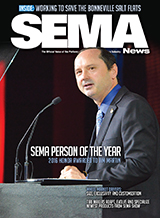
Tim Martin was named the 2016 SEMA 

Person of the Year

Tim Martin was named 2016 SEMA Person of the Year

Tim Martin is running for Chairman of the SEMA Board of Directors in the 2017 election. Tim is a Vice President at K&N, and has been a member of the K&N team for nearly 20 years. His goal is to serve SEMA members in shaping programs to benefit the industry. SEMA has tremendous resources that helps companies prepare for changes and threats in the future. SEMA’s mission is to help its members succeed, and the future requires experienced leadership.

Follow Tim's campaign at Facebook.com/TimForSEMA

Tim has served on the SEMA Board of Directors for seven years, and as a volunteer in SEMA programs for many more. He was recently honored to receive the 2016 SEMA Person of the Year award for contributions as a SEMA volunteer. He has been an effective member of the Board, and understands SEMA programs well. Understanding the potential of SEMA to help our industry and the automotive lifestyle, Tim is well suited to serve as the Board Chairman.

Tim has been involved in many SEMA and professional programs, including the following:

  • 2016 SEMA Person of the Year award recipient
  • SEMA Board of Directors (2 terms)
  • SEMA Data Co-op Board of Directors
  • SEMA Youth Engagement Task Force
  • SEMA CBLC Review Task Force
  • SEMA Board Nominating Committee
  • SEMA Garage Task Force and participant in initial SEMA Garage program planning meetings
  • SEMA Business Technology Committee (BTC)
  • SEMA Business Development Working Group
  • SEMA NextGen Working GroupSEMA Health Care Task Force
  • SEMA Fuel Economy Task Force
  • Speaker and participant at SEMA Town Hall Events
  • Speaker at several SEMA Show educational seminars
  • Speaker at SEMA Manufacturers’ Rep Network (MRN) annual meeting
  • Speaker at Performance Warehouse Association (PWA) conference
  • Speaker at AAIA/SEMA Aftermarket eForum conference
  • Speaker at AAIA National Catalog Managers Association (NCMA) conference
  • Member of SEMA PAC Presidents Club, SEMA PAC Redline Club
  • Participant at SEMA Washington Legislative Events
  • Presenter at SEMA Board Orientation
  • Member of SEMA delegation to the SCORE Baja 1000
  • Participant in many other SEMA projects and events
  • Multiple meetings with members of U.S. Congress, staff, and local government leaders
  • Member, Dean’s Advisory Council, University of California Riverside School of Business
  • Member, Business Council, Greater Riverside Chamber of Commerce
Tim Martin is running for Chairman of the SEMA Board of Directors in 2017

Tim Martin is running for Chairman of the SEMA Board of Directors in 2017

Tim is a Vice President at K&N Engineering, and joined the company as a consultant in 1997. He has served many roles at K&N over the past 20 years. His responsibilities have included leadership in sales, customer service, marketing, manufacturing, purchasing, distribution, and information technology. He previously worked as a consultant, and as an engineer for the U.S. Navy for 10 years. He has experience in project management, financial reporting processes, product development, product testing, product information standards, software development, strategy, organizational development, and legal issues.

Tim’s education includes 2 bachelor’s degrees in engineering from the University of Missouri, and a master’s degree in management from the University of Southern California. He enjoys off-roading and other motorsports, and is married with 4 children.

Tim's goals are to help improve SEMA programs that grow and protect our industry. He plans to focus on the following areas:

  • Support the SEMA Show and PRI Show as industry-leading events
  • Grow legislative programs to protect customization and recreation
  • Develop and support youth-engagement programs to grow awareness
  • Create new career development and networking opportunities
  • Improve member services and promote healthy industry collaboration

The election ballots will be emailed to the primary contact for each SEMA member company in May.

For more information about SEMA go to www.SEMA.org

Follow Tim's campaign at Facebook.com/TimForSEMA

clear

K&N PRODUCT SEARCH     WHERE TO BUY K&N

Classic 1965 Comet A/FX Drag Racer Reinterpreted As A Modern Day Street Machine

The construction of Mike Lookners 1965 Comet Cyclone took over two years

Mike Lookner pays homage to the A/FX drag cars of the '60s with an updated street version

In motorsports, there are certain periods of time when huge leaps in technology and performance occur over just a few years. Take the Indianapolis 500 in the early 1960s. Within 5 years of Jack Brabham’s appearance with his Formula 1 style car in 1961, the rear-engine cars had locked-out the Roadsters from Victory Circle at the Brickyard.

At right about the same time, just about the same thing was going on in drag racing. Despite a joint agreement signed by the Big Three automakers in 1957 not to actively support racing, they did so clandestinely.

By the early 1960s, special lightweight, high performance models were “available” to the public in order for the carmakers to win in NHRA’s popular Super Stock category. Having had enough of the automakers’ shenanigans, in 1962 the NHRA created the Factory Experimental class, the most well-known being the top-level A/FX.

The wheelbase was shifted on A/FX cars to provide more transfer more weight to rear tires

One of the original A/FX Funny Cars: Dyno Don's altered wheelbase 1965 Comet Cyclone

It started simply enough with big motors stuffed in small cars with lots of lightweight parts, moved on quickly to the outrageous altered wheelbase cars, the first to be dubbed “Funny Cars”, and then to the 1966 Mercury Comet that featured a fabricated tube frame chassis with flip-top fiberglass body that became the basis of Funny Cars to this day.

There are many who look back at the years between the forming of the Factory Experimental class and the appearance of the first flip-top Funny Car was a golden age of door-slammer drag racing. Count Mike Lookner among them.

Thankfully for Mike, his brother Andrew runs Extreme Machine Unlimited, in their home state of Massachusetts. Together the two conspired to build a 1965 Comet Cyclone influenced by the AF/X cars of the early 1960s, but not be limited by 1960s technology. In essence, they reinterpreted the concept of the AF/X to a streetable car of the 21st century.

Mike's Comet was fitted with mini-tubs to accomodate 12" wide rear wheels and tires

Mike's Comet was fitted with mini-tubs to accomodate 12" wide rear wheels and tires

The result is a stunning car that’s as at home on the street or strip as it is in a car show. An indication of the level of seriousness with which the Lookner brothers took this project, the body was sent to International Show Car Association (ISCA) category winner George Kouthouridis to repair and prepare the metalwork and massage all the panel gaps.

Peter Newell of Competition Specialties sprayed the body in Candy Brandywine that looks like it’s three feet deep, with the bumpers painted in metallic Argent giving them the appearance of the unpolished aluminum bumpers on early A/FX cars.

The four point roll bar provides easy access in and out of the car, yet still protect on the strip

The interior was kept stock looking except for a few safety features plus a full set of gauges

The interior was kept relatively stock-looking, with factory vinyl replacement seats along with door panels and headliner. The only real tip-offs that this car isn’t a stock restoration from the inside are the Autometer gauges, Grant steering wheel, four-point roll bar, and Simpson four-point driver’s harness.

Underneath subframe connectors were added by DMC Racing to strengthen the chassis in preparation of the powerful big block motor. A Ford 9-inch rear axle with 4:10 gears was fitted to accommodate the larger 15x12-inch rear wheels that will reside in the mini-tubs. The multi-leaf rear spring was replaced by a mono-leaf, which now acts more as a locating device.

The rear suspension loads are now carried by QA1 adjustable coilovers. Up front, a Total Control Products dual-adjustable coilover conversion was installed. Brakes are a conservative 11” front disc and rear drum set-up. The Radir wheels selected nicely reflect the five spokes on “Dyno Don” Nicholson’s 1965 AF/X Comet Cyclone.

The FE block was also used in the A/FX Funny Car drag racers of the 1960s

The Ford FE big block was built by Mike's brother Andrew and produces 650 horsepower

But, of course, it’s under the hood where things get really exciting. Brother Andy built the motor from an original Ford 428 FE (same block as used for the 427 Cammer motors in A/FX) from a 1968 donor. He punched it out to 469 CID and it now produces 650 horsepower, delivered through a three-speed C4 automatic transmission built by Monster Transmissions.

The bottom end features a Scat crank and Eagle rods all forged from ultra-high strength 4340 alloy steel, 11.25:1 JE aluminum pistons, and an aggressive solid lifter camshaft from Cam Motion.

Intake air is drawn through the factory hood scoops and into a pair of K&N E-3280 filters into matching Edelbrock AVS 650 CFM carbs, Edelbrock RPM aluminum intake, and into a set of Edelbrock RPM aluminum heads, topped with valve covers featuring K&N 62-1220 breathers.

The process took two-and-a-half years to complete, but even just from viewing the photographs, the results are both stunning and a fitting tribute to that insane era of drag racing.

clear

K&N PRODUCT SEARCH     WHERE TO BUY K&N

Dave Reed Doubles Down To Pursue Two Championships in Spears Southwest Tour

Dave Reed Racing enters two cars in the Southwest Tour series, both supported by K&N

Craig Raudman (2) and Austin Reed (14) side-by-side at Kern Raceway (Photo by Amanda Perryman)

You’d think that as a car owner when the driver you’ve planned on racing for you decided instead to go in a different direction, it would set back your program. But not for Dave Reed. Instead Reed has decided to go for a double championship – for drivers and car owners – in the 2017 Spears (SRL) Southwest Tour Series.

Reed, CEO of Advanced Memory, a company that manufactures high reliability computer memory for critical applications like the military, has operated Dave Reed Racing and entered cars in various race series around the West Coast since 1993, including NASCAR Craftsman Trucks, K&N NASCAR Pro Series West, Legends, Mini Outlaws, and even local Late Model.

Promising young driver Ricky Schlick, who had raced for Reed in 2016, has had the opportunity to move to another team to compete in a full-season of the SRL for 2017, so Reed was faced with a choice. Continue to run different drivers for a few events each or concentrate on a single driver and work toward not one, but two championships. He chose the more difficult but potentially more rewarding route.

Dave Reed is looking for both the Owners and Drivers champsionships in 2017

Craig Raudman will be the full-time driver of the #2 car (Photo by Roger Seymour Photography)

So Reed will now be chasing the two championships with veteran full-time driver Craig Raudman in the Number 2 car. In 2016, Raudman drove in five races for Reed, with one top 5 and two top 10 finishes to his credit.

There’s also a long-term relationship between Reed and Raudman that dates back to 1994, which is clearly to their benefit. Raudman is also well-known as an ace crew chief on short track cars, which can do nothing but improve the team’s ability to set-up the car quickly.

Raudman may be best known for his victory in the short-lived LA Street Race that was part of the NASCAR Featherlite Tour Series at the time, beating out both series regulars as well as some big name drivers attracted by the prestige of the event and large purse on offer. The event ran for just three years and Raudman nearly won the first two as well.

The team has great hopes that the new chassis design will vault them to a championship

The chassis that Craig Raudman drove to fourth, under construction (Photo by Craig Raudman)

The one fly in the ointment is that Raudman has a potential conflict at the May race at The Bullring in Las Vegas (more about that in a minute).

Reed is pulling out all the stops toward his double championship quest. He’s fielding two new Straight Rail chassis cars from Victory Circle, in Bakersfield. Not only does Reed’s team benefit from having their chassis builder intimately familiar with all the tracks in the series, but with Bakersfield so central geographically to the tracks, if there’s crash damage to the frame that needs to be repaired in the jig, it’s a fast turnaround. Reed is also having a third car built by Bond Suss Racing in Charlotte.

For filters, Reed has been a loyal partner with K&N for 15 years.

“We have been fortunate to be able to tour their facilities several times and it is truly is an amazing facility,“ Reed said. “ K&N has the best quality out there not to mention the people behind the products.”

Dave Reed Racing has been using K&N Filters consistently for over 15 years

The K&N logo proudly displayed on the rear of one of Dave Reed's cars (Photo by Dave Reed)

High praise from a man whose daytime job it is to run a company that manufactures memory modules for, among others, military and aerospace applications.

The Number 14 car will be driven by a rotating roster of drivers, including Reed’s son Austin, Eric Norris - stunt coordinator on the Hawaii 5-0 television series and son of martial arts legend Chuck - and one or two drivers yet to be named. Reed hinted at one being an East Coast hot shoe while another is a former Southwest Tour Champion. Most intriguing is the driver who might fill in for Raudman at The Bullring: a “household name” in racing, according to Reed.

At the first race of the season at Irwindale, Raudman ran in the Top 5 in all practices, finished an impressive fourth in a race won by Bobby Hodges, with 2016 champ Derek Thorn second. Raudman started seventh and steadily worked his way up to fourth over the course of the race. All in a brand-new race car fresh off the trailer. Most definitely a good omen for the start of a very ambitious season.

clear

K&N PRODUCT SEARCH     WHERE TO BUY K&N

Ganancias caballos de potencia para el del Toyota Camry con Sistema de Toma de Aire K&N

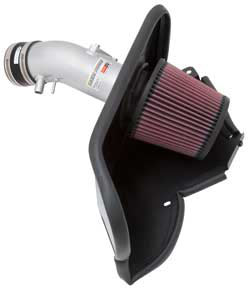
Sistema de toma de aire K&N para el Toyota Camry de 3.5L del 2012 al 2017
El Toyota Camry ha estado en producción desde 1982 y sigue siendo uno de los vehículos más populares hoy en día. Toyota sacó a la luz el modelo 2012 (XV50) en septiembre de 2011, para sustituir la serie XV40 como la séptima generación del Camry. Este modelo tiene una opción del motor de 2.5 litros, y de 3.5 litros. Mientras que el 2,5 litros es ideal para la ciudad, algunos conductores pueden necesitar un poco más de poder para llegar a su destino, eligiendo el modelo V6 de 3,5 litros.

K&N ha diseñado un Sistema de Toma de Aire de Rendimiento de Alto Flujo para acomodar el motor V6. El 69-8618TS es un sistema de toma de aire personalizado que permite un mejor rendimiento del vehículo y proporciona una excelente filtración para proteger su motor. Está construido para disminuir drásticamente la restricción de toma de aire al suavizar y enderezar el flujo. Esto permite que el motor del vehículo respire más fácilmente que el conjunto de la caja de aire OEM, dando como resultado mayor potencia y rotación. El 69-8618TS se ajusta a los modelos Toyota Camry 2012-2017 con un motor V6 de 3,5 litros.
La toma de aire K&N instalada en un 2012 Toyota Camry 3,5 l.


El filtro de aire con forma de cono (RU-4990), incluido con la toma de aire, es lavable y reutilizable. Ya no hacen falta filtros de aire desechable que hay que cambiar una y otra vez. El filtro de aire de rendimiento RU-4990 se puede utilizar hasta 160.000 kilómetros antes de que sea necesario limpiarlo, dependiendo de las condiciones de conducción.

Este sistema de toma de aire también está equipado con un escudo térmico para ayudar a desviar el calor del motor. También viene con un tubo de aluminio de baja restricción, con un acabado de cubierta en polvo de plata personalizado diseñado para el Toyota Camry. La instalación se puede completar en menos de 90 minutos con el uso de herramientas manuales habituales. El 69-8618TS de K&N incluye instrucciones paso a paso con fotos detalladas para una fácil su instalación.

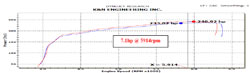
Resultados de Dyno para un Toyota Camry 3.5L 2012 con toma de aire 69-8618TS instalada

A pesar de que el Camry no se considera un coche de alto rendimiento, todavía se puede disfrutar de la potencia extra que un sistema de toma de aire de rendimiento de K & N proporciona, a la vez que disfruta de la comodidad, seguridad y fiabilidad de un Camry. K&N probó la toma de aire 69-8618TS en un Toyota Camry 2012 con un motor de 3.5L y vio un aumento estimado de 7 caballos de potencia a 5914 RPM y 6.5 lbft de rotación a 4.698 RPM. Lo mejor de todo es que el 69-8618TS está respaldado por la garantía limitada Million Mile de K&N, por lo que será la última toma de aire y el filtro de aire que necesitará su Toyota Camry.

La toma de aire K&N 69-8618TS se ajusta a los siguientes Camrys:
2017 Toyota Camry 3.5L V6
2016 Toyota Camry 3.5L V6
2015 Toyota Camry 3.5L V6
2014 Toyota Camry 3.5L V6
2013 Toyota Camry 3.5L V6
2012 Toyota Camry 3.5L V6

Para obtener una lista completa de todas las tomas de aire de K&N disponibles para el Toyota Camry, visite la página de las Tomas de Aire para Toyota Camry en knfiltros.com. ¿No es el vehículo que buscaba? Echa un vistazo también a la página de las tomas de aire de K&N para modelos Toyota Camry en el sitio web de K & N.

Encuentre los productos de K&N para su vehículo usando la búsqueda de aplicaciones de K&N y luego use la herramienta de búsqueda de distribuidores de K&N para encontrar un concesionario de K&N en su zona del mundo.

Ganancias caballos de potencia para el del Toyota Camry con Sistema de Toma de Aire K&N Ganancias para el 2012 al 2017 del Toyota Camry de 3,5 l. caballos de potencia con Sistema de Rendimiento de Toma de Aire K&N
Fil el Filtro
Chatear ahora